“It’s important to understand that an authentic natural trim is not a magic bullet. Assuming management practices and the animal’s environment and welfare are reasonable, a correctly-done natural trim will produce strong, healthy hooves – there is no question about that. But if they aren’t, nothing that is done to the hoof itself is going to prevent the development of, or fix, hoof problems.”
– Bruce Nock, PhD
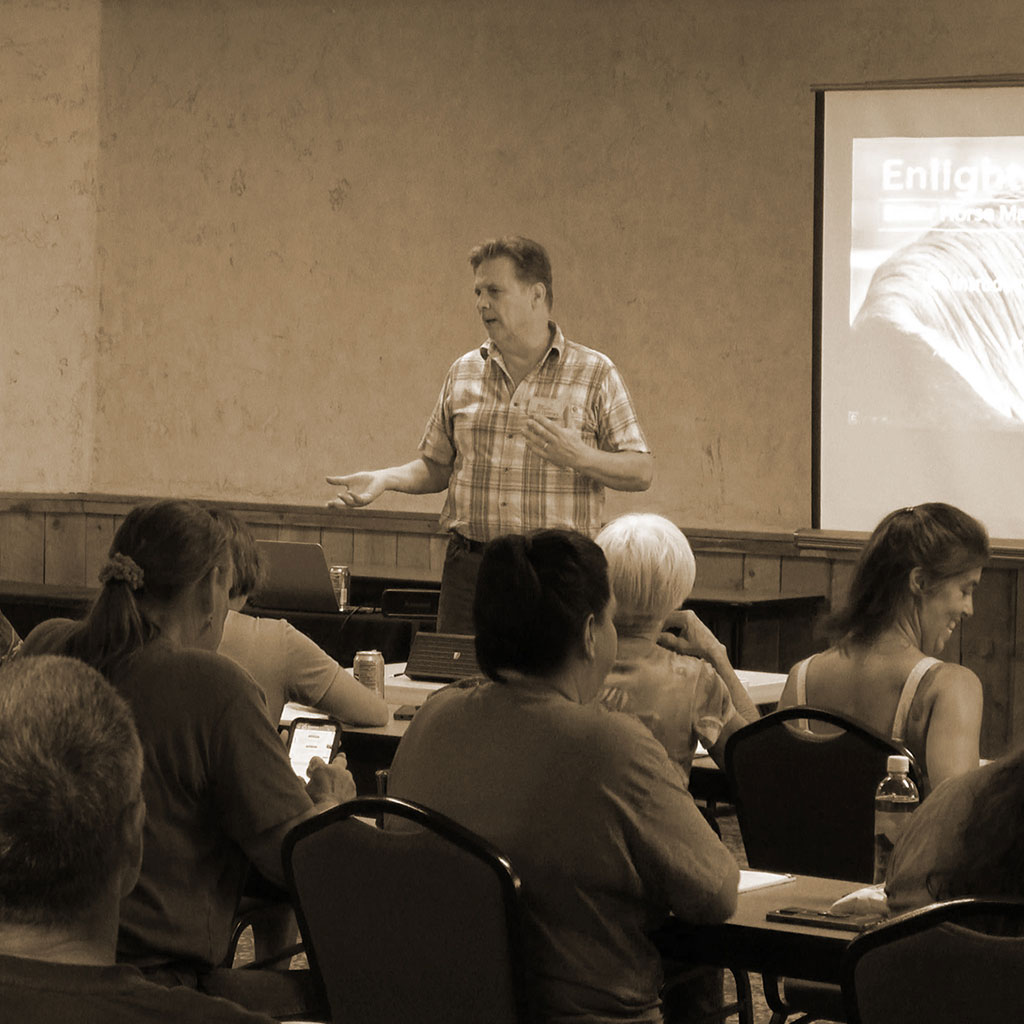
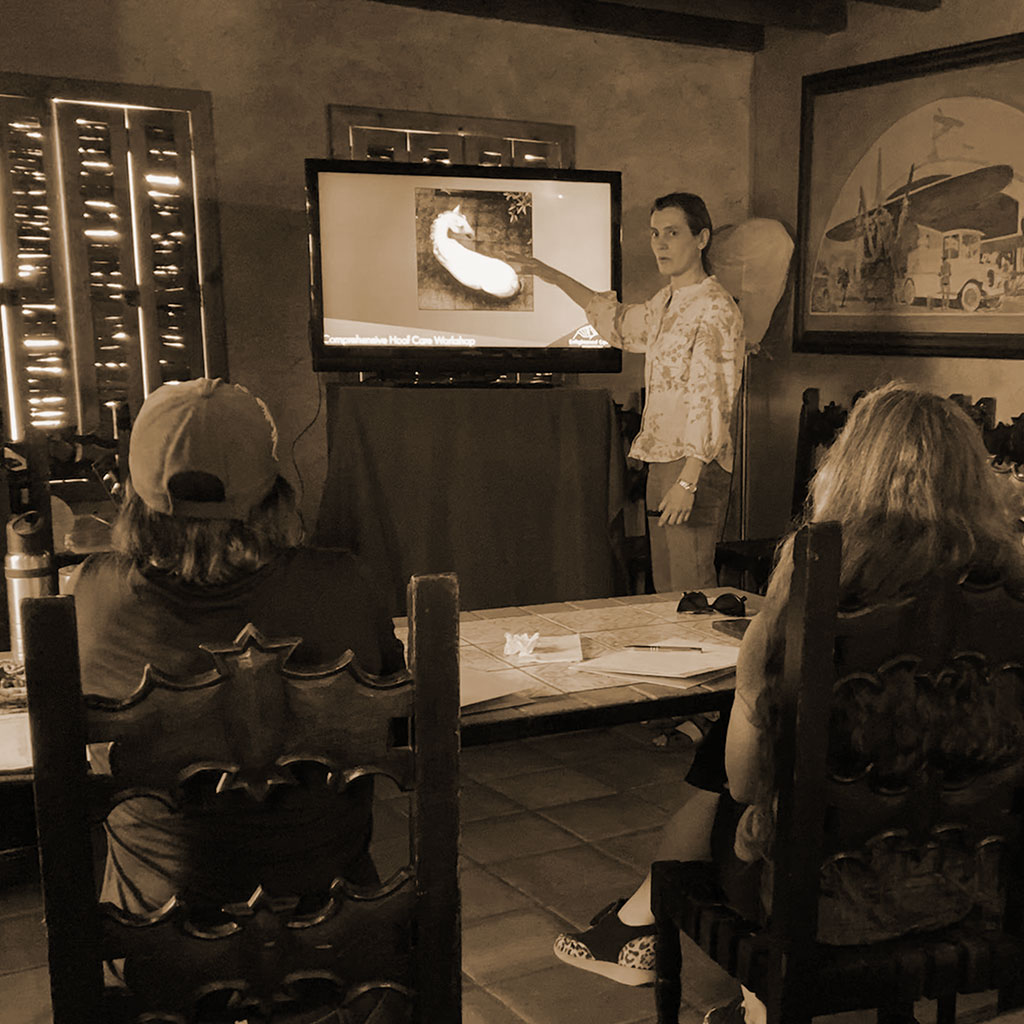
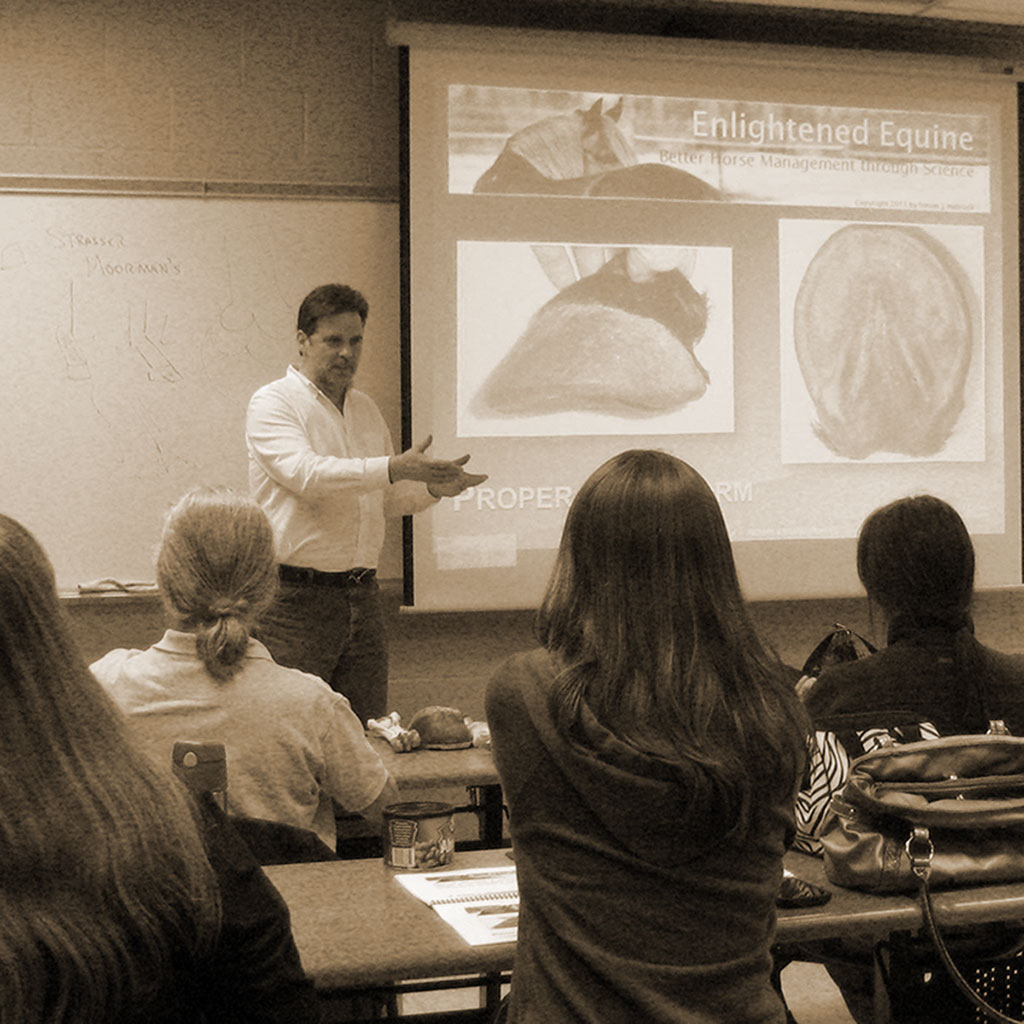
We’re firmly convinced, as our many years of experience have so clearly and frequently demonstrated to ourselves, our clients, and our students the world over time and again, that proper hoof care is about more than trimming the bottoms of the hooves – much, much more! And that’s why the Comprehensive Hoof Care Workshop goes far beyond just another “how-to-trim” clinic.
In these strictly “LIVE” classes, conducted via Zoom, you’ll have a front-row seat to learning about the all-important “why” of proper hoof care. Understanding the significance of the various tissues of the equine foot, why they’re structured and arranged as they are, and why their function and form is so intimately tied not only to movement and terrain, but also to a host of other aspects of the life of the horse, will enable you to correctly assess the health of each foot as an individual. You’ll be equipped to identify common hoof issues and their underlying causes – both at the ground level and above. Solve long-term hoof problems that have eluded your vet and farrier, and get your horse back on the path to long-term comfort and soundness!
For pricing and registration, please visit the Fees & Registration page.
Here’s a brief description of each of the workshop classes –
The Illusion of Knowledge: Sorting Fact from Fiction (50 min.)
The horse hoof world is chock-full of both scientifically-unsound information and self-proclaimed “experts” with no credentials to support their assertions. We’ll discuss ways to help the horse owner make sense of it all.
Hoof Boots & Boot Fitting (60 min.)
Hoof boots can be an invaluable tool under certain circumstances, and provide far superior protection to any type of horseshoe. We’ll discuss when the use of hoof boots is appropriate, how to select an appropriate boot for a particular horse, and examine the different types of boots offered by various manufacturers. We’ll also discuss measuring and fitting techniques.
Functional Distal Limb Anatomy (80 min.)
A basic knowledge of the structures of the horse’s lower leg and foot, how they interconnect, and how they function, is an important and necessary step in preparing oneself for proper hoof trimming and for assessing the work of others.
Case Studies (60 min.)
An in-depth look at useful and interesting real-world hoof trimming and horse management examples from the instructors’ years of experience, accompanied by before- and after-trimming photos.
Techniques for Visual & Auditory Trim Evaluation (50 min.)
Identifying proper and improper hoof form can seem like a daunting undertaking, but an understanding of the true causes of hoof form coupled with some fairly simple photographic, video, and listening techniques will well-prepare the horse owner to successfully evaluate hoof form.
Fundamental of Equine Nutrition (110 min.)
Healthy hoof function & form is impossible without the necessary nutritional building blocks, which means a diet tailored to the specific requirements of the horse. This PhD equine nutritionist-taught class will cover the basics of a proper equine diet, including advice about what and when to supplement.
Problems Caused by Incorrect Trimming (60 min.)
Hoof problems can arise from a number of sources directly related to improper hoof trimming. We’ll examine the most typical problems likely to be encountered by the horse owner, and how best to manage or resolve them through proper trimming.
Understanding Equine Navicular Disease (60 min.)
Navicular disease is arguably the most frequently-diagnosed cause of lameness in the horse, yet few truly understand what navicular disease is – and isn’t. We’ll help the hoof care practitioner make sense of the “navicular” diagnosis, and offer proven advice on prevention and management.
The Hoof Consequences of Horse & Rider Asymmetry (60 min.)
Distorted hoof forms are often mistakenly attributed to improper hoof care when the real culprit may in reality be issues with the horse’s conformation and/or how the rider positions him/herself when riding. We’ll explore these common causes and their effects on hoof form.
Equine Lameness Detection (60 min.)
Although the foot is usually assumed to be the source of any lameness in the horse, it’s often located elsewhere. But the first step in addressing any lameness is identifying the affected limb, which can be a truly daunting undertaking. Class discussion will include techniques for determining the location and cause of lamenesses.
Feeding for Healthy Horses & Hooves (80 min.)
Obesity among horses is an increasingly-common problem and can lead to serious metabolic issues and hoof difficulties. This step-by-step walk through the diet-planning process, including worksheets, will enable the horse owner to plan an appropriate diet for his/her horse.
Basics of Equine Behavior (90 min.)
As hoof care practitioners, much of our efforts in dealing with client horses end up being unnecessarily lengthy and frustrating because of behavior issues. This class will focus on equipping the practitioner with an understanding of equine behavior principles so he/she may better advise and assist the client in dealing with difficult behaviors.
Problems Caused by Care & Management Issues (30 min.)
Although the point of departure for healthy hooves is always a proper trim, the hoof cannot attain – or maintain – a truly healthy state without control over other diet, management, and environmental factors that affect hoof function and form.
Equine Foot Radiography (60 min.)
The hoof care practitioner is often called upon to examine radiographs of the horse’s foot when pathologies are suspected or patently obvious. This veterinarian-led session will provide an introduction to radiographic practices, including terminology, positioning, and interpretation.
Trimming the Non-Equine Hoof (30 min.)
While trimming the hooves of other ungulates such as giraffe, zebras, antelope, goats, pigs, and cows may seem daunting, the principles learned from horses can be successfully applied to the hoof care of all other hooved animals. We’ll explore their anatomical similarities and differences, and how these affect the trim process.